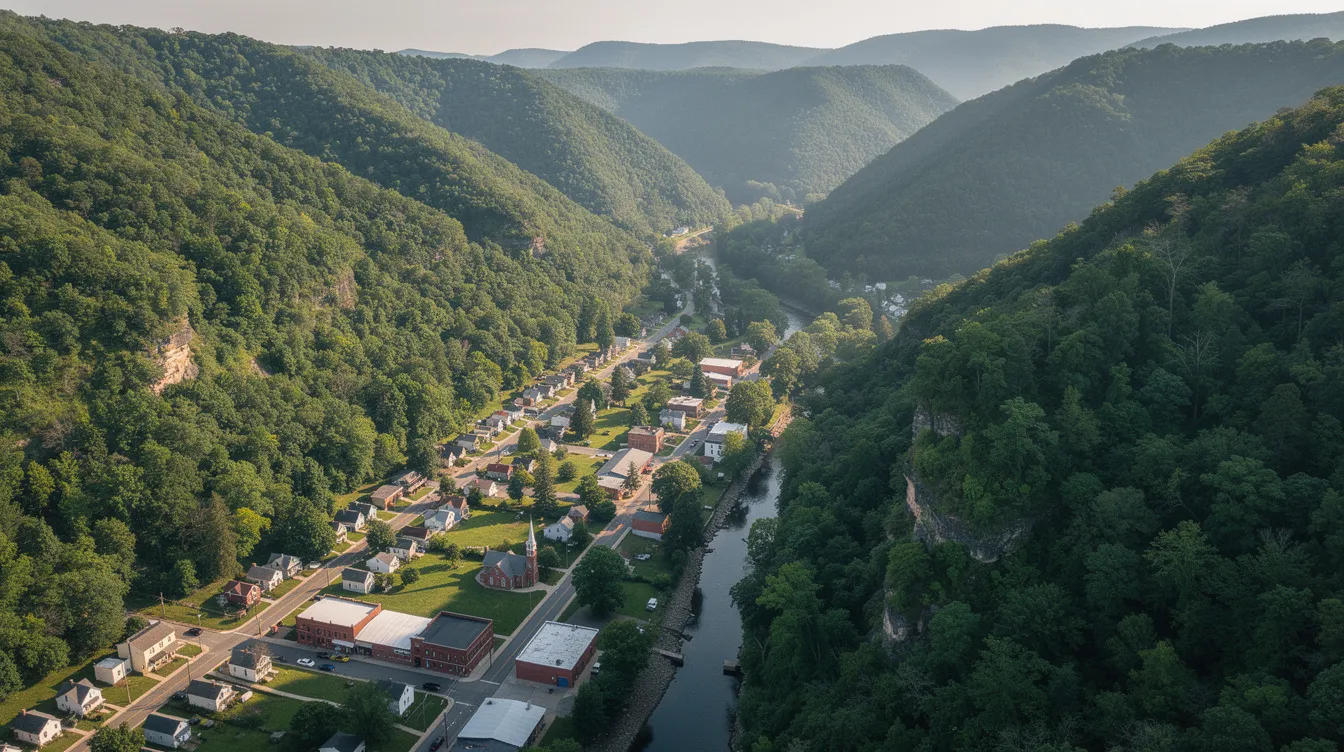
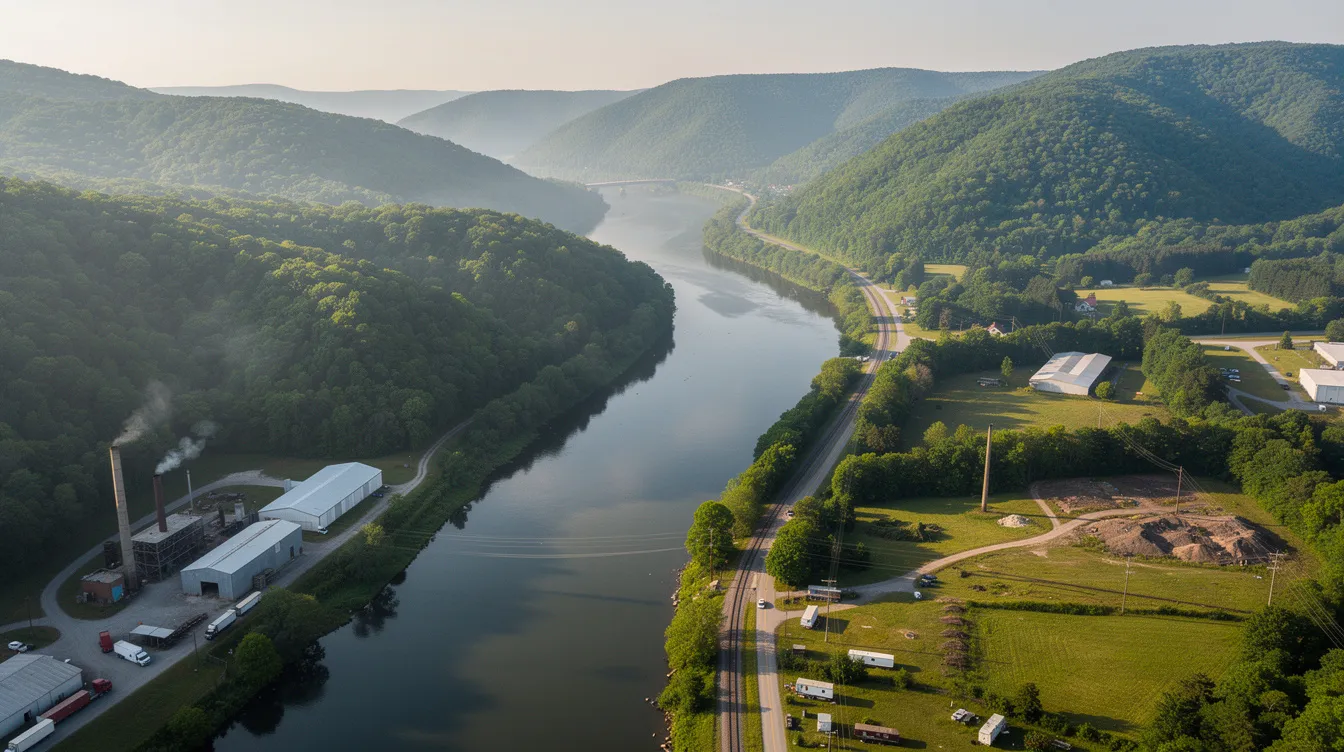
West Virginia enters 2027 carrying $96 billion in announced private-sector investment, yet official forecasts point to near-zero employment growth. This article separates the headlines from the data and examines what the state's economy actually looks like for businesses, workers, and communities.
Key Takeaways
- West Virginia has approximately $96 billion in announced private-sector investment since October 2025, according to the West Virginia Division of Economic Development (release dated September 4, 2026), but many projects remain in planning or early construction stages with no confirmed spending or filled positions.
- Official forecasts from WVU's Bureau of Business and Economic Research and a 2026 update presented via the West Virginia State Treasurer anticipate flat or negative employment growth through 2027, despite headline announcements.
- West Virginia's economy is uneven across regions: energy- and mining-focused areas face stagnation or decline, while the Eastern Panhandle and university-centered communities show stronger growth prospects.
- More than 111,000 small businesses operate in West Virginia, accounting for over 98 percent of all businesses, making local business vitality the true test of economic development success.
- Mountaineer Business Network connects statewide economic context with regional opportunities via platforms like TygartValley.com, MyOhioValley.com, MyKanawhaValley.com, and NewRiverValleyWV.com-it is not a government agency or official planning authority.
West Virginia Economic Development Entering 2027
As of November 2026, West Virginia economic development occupies a peculiar position: the state has never attracted this much announced investment in such a short period, yet the labor market remains essentially flat. For business owners and community leaders, economic development means more than press releases-it encompasses private investment that actually breaks ground, jobs that people fill, infrastructure that gets built, wages that support families, and small-business activity that keeps main streets alive.
The September 4, 2026, announcement from the West Virginia Division of Economic Development reported approximately $96 billion in announced private-sector investment and more than 19,000 projected jobs since October 2025. These numbers are striking. They are also announcements and projections, not completed capital expenditures or confirmed employment. As of 2026, West Virginia is emphasizing economic diversification beyond coal, and West Virginia's economic development is transitioning from a legacy extraction economy to a diversified framework. Whether that transition delivers results depends on macroeconomic conditions-interest rates, real GDP growth nationally, global energy markets-and on how many projects move from paper to production.
This article separates marketing claims from verifiable data across every section, drawing on sources including BLS, WVU BBER, WorkForce West Virginia, and the Appalachian Regional Commission.
Where West Virginia's Economy Stands
West Virginia's economy in late 2026 shows modest aggregate stability, masking sharp differences by sector and county. The state faces challenges from an aging population and geographic limitations in economic development that constrain growth even when investment flows in.
As of September 2026, the civilian labor force stood at approximately 772,000 people, with about 30,700 unemployed, producing West Virginia's unemployment rate of 4.0 percent (BLS, September 2026, preliminary, not seasonally adjusted). West Virginia ranks 12th for the lowest unemployment rate in the country-a notable achievement compared to the national average-though the state's unemployment rate hit an all-time low of 3.5 percent in 2023 before ticking upward. West Virginia's labor force participation rate was approximately 53.8 percent in September 2026, compared to the U.S. national average of about 61.8 percent at the same time. In 2023, West Virginia's labor force participation rate was just shy of 55 percent, meaning participation has declined modestly. West Virginia's population has declined by over 88,000 since 2012, contributing to workforce constraints that investment alone cannot solve.
Per capita personal income in West Virginia was $52,585 in 2023 (Bureau of Economic Analysis). WVU BBER forecasts real per capita personal income growing at about 2 percent annually through 2029, but overall state employment is expected to remain essentially flat through that same period. West Virginia's poverty rate was 17.9 percent in 2000, and while income gains have occurred in recent years, many rural counties continue to lag. The state's economy is defined by sector divergence: education and health services show year-over-year gains of roughly 2 percent, while mining and logging have declined by 3 to 4 percent over 12 months ending September 2026.
Nonfarm employment showed a 12-month percentage change around negative 0.2 percent to zero as of mid-2026. The previous year saw marginally better performance, but these aggregate numbers obscure large county and regional differences covered in later sections.
Major Economic Development Announcements in 2026
The year 2026 has seen several high-profile economic development announcements across West Virginia, particularly in energy, digital infrastructure, and life sciences. The state's September 4, 2026, report of approximately $96 billion in announced investment and more than 19,000 projected jobs since October 2025 provides the most comprehensive snapshot-but these are not confirmed outcomes.
| Project / Company | Location | Industry / Sector | Announced Investment | Projected Construction Jobs | Projected Permanent Jobs | Current Stage (Late 2026) |
|---|---|---|---|---|---|---|
| NScale (Phase 1) | Statewide site certified | Data Center | $69.2 billion (Sept 2026) | ~4,375 | ~645 | Announcement + site certification |
| Starwood Digital Ventures | Mason County | Data Center | $12 billion (2026) | Not disclosed separately | ~1,500 total | Certified, early stage |
| Randox Expansion | Jefferson County | Life Sciences | $13 million (2026) | Not disclosed | ~100 | Expansion projected |
| AEP / Longview Power | Monongalia County | Energy / Power | Not fully detailed | Not disclosed | Not disclosed | Acquisition announced |
Where project status or job breakdowns are unavailable, "not disclosed" is used. These gaps matter: local planning authorities and businesses need specifics about timelines, hiring, and infrastructure demands to prepare effectively.
Announced Investment vs. Real Economic Impact
West Virginia economic development conversations often conflate announced capital investment with actual economic outcomes. Business owners and local officials must distinguish between these concepts.
Proposed capital investment is what a company pledges at announcement. Actual capital expenditures are dollars spent over time-often across multiple years. Temporary construction employment exists only during the building phase; NScale's projection of approximately 4,375 construction jobs compared to only 645 permanent operating positions illustrates this gap sharply. Permanent operating positions represent the long-term payroll, but even those jobs may not all go to local residents-workers may commute from out of state or require specialized skills not available locally.
Payroll reaching local households, local supplier spending, state and local tax revenue, and public infrastructure costs all develop on different timelines. Some large projects-especially data centers-place new demands on electricity, water, roads, and housing that may require public investment before tax revenues materialize. West Virginia receives around $261 million in federal R&D funds annually, but that pipeline cannot cover every infrastructure gap created by capital-intensive projects.
Communities should insist on performance-based incentives, monitor which stages projects have actually reached, and plan for scenarios where timelines shift or projects are scaled back.
West Virginia Manufacturing and Industrial Development
Manufacturing remains a significant presence in the state's economy, though its composition is changing. The chemical industry accounts for 40 percent of West Virginia's manufacturing output, concentrated in the Kanawha and Ohio River Valleys. Automotive production-anchored by Toyota in Putnam County-aerospace and defense-related manufacturing in North Central WV, and food processing across various counties form key clusters. The state capitalizes on natural resources to attract technology and manufacturing industries, with river, rail, and highway access along I-79, I-64, and the Ohio River corridor underpinning many location decisions.
Plans to develop industrial sites focus on making them ready for immediate use by businesses. In November 2026, the state announced a $40 million investment in industrial site readiness: $25 million in loans for industrial shell buildings with wage requirements at 120 percent of county median, and $15 million in grants for site preparation. WVU BBER forecasts manufacturing employment to grow by approximately 0.8 percent per year through 2027-modestly outpacing statewide employment growth but still below pre-pandemic levels in many counties.
Workforce needs span skilled trades, industrial maintenance, process technicians, and engineering and logistics roles. Programs targeting workforce development focus on aligning training with industry needs, with community and technical college programs playing a critical role in certain areas.
Energy, Natural Gas and Data Center Development
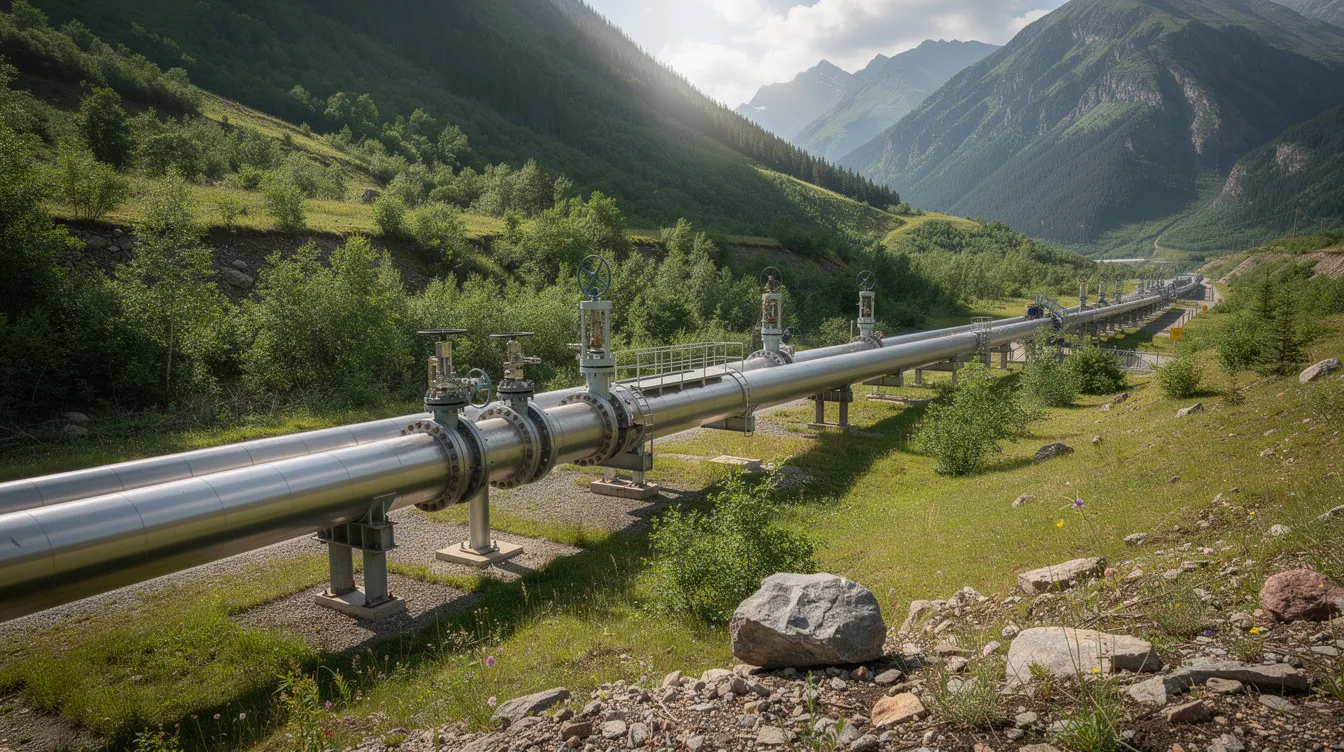
West Virginia has long been a leading energy-producing state. Coal employs 30,000 West Virginians, generating $2 billion in wages. West Virginia produces 15 percent of the nation's fossil fuel energy. West Virginia maintains significant coal and natural gas production rankings nationally, and natural gas development in the Marcellus and Utica shales, combined with midstream infrastructure along the Ohio River, has positioned certain counties for energy-intensive industries. The state has 180,000 barrels of oil produced monthly, and the state plans to continue attracting renewable energy projects to diversify its energy portfolio. The state's economic strategies prioritize energy innovation and outdoor recreation as twin pillars of future growth. The Appalachian Regional Clean Hydrogen Hub is a federal initiative involving West Virginia that could further expand the energy sector.
Data centers and AI-computing infrastructure are interested in WV for relatively lower-cost and abundant electricity, proximity to major Eastern population centers, and access to developable sites. But data center economics are distinct: very capital-intensive facilities with modest permanent employment relative to investment size. NScale's first phase projects approximately 2 gigawatts of power demand; Starwood's planned Mason County project requires approximately 2.16 GW. Both are in early stages, and long-term employment will be a small fraction of construction jobs.
Community-level benefits include construction work for local contractors, property and business tax base growth, and potential ancillary development. Risks include grid strain requiring expensive infrastructure upgrades, limited direct job creation, and uncertainty about long-term corporate strategies and technology shifts.
What West Virginia's Workforce Data Really Shows
West Virginia's workforce conditions as of September 2026 reveal a labor market that is tight by headline metrics but structurally constrained. The State Treasurer's 2026 economic update projects negative state employment growth for 2026 and virtually zero employment growth in 2027. West Virginia's unemployment challenges are tied to population decline and low workforce participation, not a lack of job openings-job openings in West Virginia averaged 7 to 8 percent from 2021 to 2023.
By 2023, West Virginia had added about 7,000 jobs over pre-pandemic levels, and private sector employment reached 100.9 percent of January 2020 levels. But the labor force has not expanded to match. West Virginia's labor force participation rate was just shy of 55 percent in 2023 and has since dipped to approximately 53.8 percent. BBER expects unemployment to creep into the low-5 percent range by 2026-2027 as discouraged workers re-enter the labor force without enough new positions to absorb them.
The distinction between jobs announced in press releases and jobs filled in payroll data remains critical. Key skills gaps include healthcare and nursing shortages, skilled trades and construction positions, and IT and advanced manufacturing roles. Community and technical college programs are essential-but capacity, alignment with employer demand, and access remain uneven across the state. Communities heavily dependent on one or two large employers carry particular risk; past coal and manufacturing downturns provide cautionary context.
Small Businesses and the Local Economy
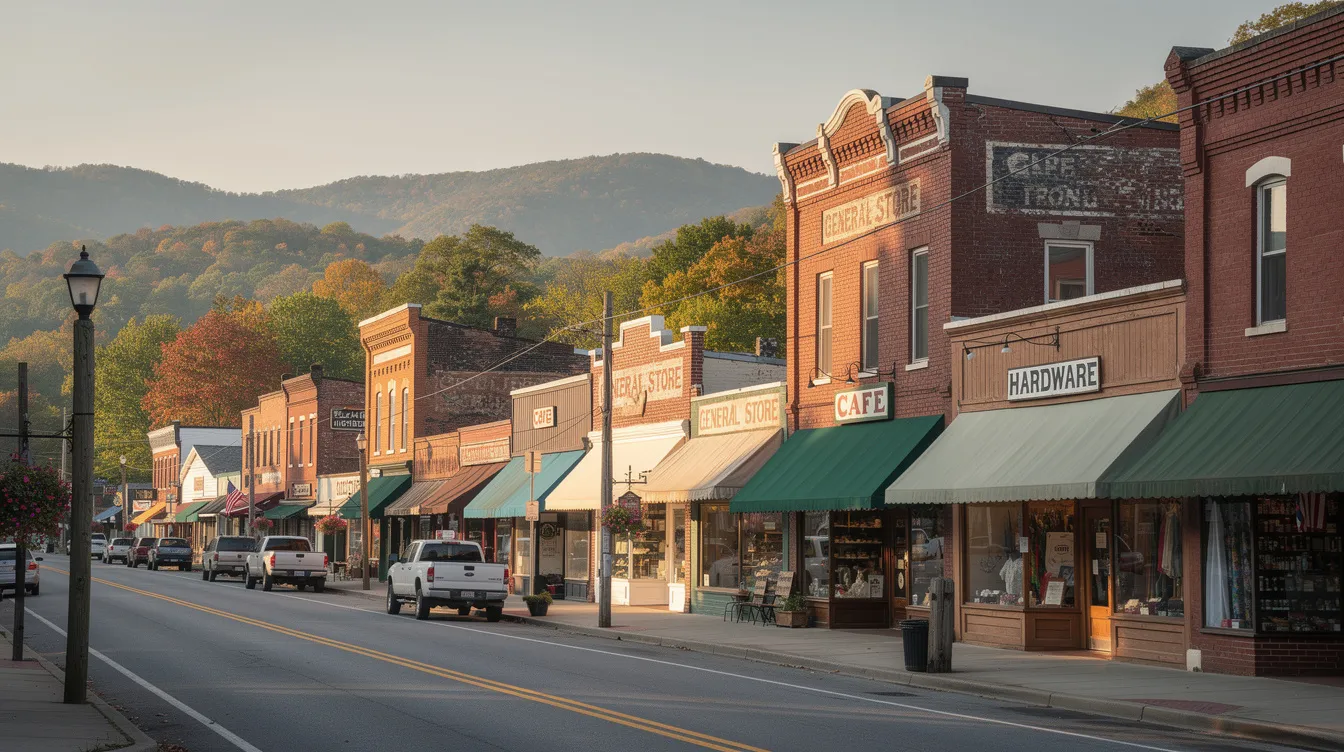
While major investments dominate headlines, more than 111,000 small businesses operate in West Virginia, accounting for over 98 percent of all businesses. These businesses-retail stores, restaurants, contractors, professional firms, hospitality and entertainment venues-are how families experience the state's economy day-to-day.
Household income from wages, Social Security, pensions, and self-employment feeds local spending on groceries, auto repair, healthcare, and childcare. Attracting capital investment does not automatically create broad local prosperity unless workers are hired locally at sustainable wages, local firms participate in supply chains, and communities manage housing and quality-of-life factors. The tourism sector in West Virginia has a reported annual economic impact of $9.4 billion, which reaches small businesses in hospitality, food service, and retail across the state.
Challenges for small businesses include access to capital, workforce recruitment and retention, navigating state and federal programs, and adapting to online commerce. WV Forward collaborates with investors to enhance funding streams, and the West Virginia Economic Development Authority offers loans to businesses seeking to expand. Mountaineer Business Network aims to help by providing context and regional discovery platforms that make it easier for residents, visitors, and businesses to find local enterprises.
Regional Differences Across West Virginia
West Virginia's economy is not monolithic. Counties and regions differ substantially in industry mix, population trends, income, and access to markets.
The Northern Panhandle and Ohio Valley-including Wheeling and the river corridor-have an industrial and manufacturing base with some growth prospects in energy infrastructure. Museums, cultural heritage, and river access define quality of life but economic outcomes depend on energy price volatility.
North Central West Virginia, anchored by Morgantown, Clarksburg, and Fairmont, benefits from WVU's presence, some tech and research spillover, and stronger health services and education sectors.
The Kanawha Valley, centered on Charleston, remains the hub for state government, chemicals, and healthcare, but faces mixed prospects with government employment stable or declining.
Southern West Virginia-the coalfield counties-faces the most severe demographic challenges, with population decline in many counties. New River Gorge National Park and outdoor recreation assets are expanding tourism, and West Virginia is promoting outdoor recreation and tourism as primary economic drivers in these areas.
The Potomac Highlands offer outdoor recreation and small-town economies with modest growth projected in a few counties, especially where broadband enables remote work through programs like Ascend West Virginia, which offers relocation incentives to encourage remote workers to move to the state.
The Eastern Panhandle-Jefferson, Berkeley, and Morgan counties-is the fastest-growing region, driven by proximity to DC and Baltimore markets, logistics connections, and in-migration. Jefferson County has a skilled labor force of 2.5 million nearby, making it an advantage for companies considering expansion.
West Virginia's Official Regional Development Structure
West Virginia is organized into 11 Regional Planning and Development Councils that coordinate multi-county planning, help secure and manage federal and state infrastructure funding, and support local governments with technical assistance.
These public entities are distinct from the independently operated Mountaineer Business Network and its regional discovery hubs:
- Regional Planning and Development Councils are official public planning bodies responsible for infrastructure, funding, and regulatory coordination.
- Mountaineer Business Network is not a government agency. It provides information, business context, and discovery tools for private and public stakeholders.
Understanding this structure matters for business owners who need to know which entities plan roads, water systems, and broadband upgrades versus which organizations handle business discovery and marketing.
Infrastructure Needed for Long-Term Growth
Sustainable economic growth in 2027 and beyond depends on more than incentives. West Virginia aims to enhance its infrastructure to facilitate job growth and economic activity, but gaps remain across transportation, digital connectivity, utilities, and housing.
Highway corridors including I-64, I-77, I-79, I-68, and US 50 connect the state's regions, but bridges, river ports along the Ohio, and rail access for manufacturing and energy shipments need continued investment. West Virginia aims to improve broadband access to support its economic development strategy, though last-mile connectivity challenges persist in rural counties-affecting remote work, education, telehealth, and data-intensive industries.
Electricity generation and transmission capacity is especially critical given data center and industrial power loads. Water and wastewater treatment capacity for industrial sites and growing communities requires attention. Housing availability and affordability create pressure in faster-growing regions like the Eastern Panhandle, while aging housing stock and blight challenge declining-population counties.
A major investment announcement does not automatically solve these constraints. In some cases, it increases pressure on local systems and budgets.
Business Incentives and Investment Programs
West Virginia offers several economic development incentives relevant in 2027, including state tax credits for manufacturing and distribution, job creation and training incentives, and industrial site readiness programs. The West Virginia Economic Development Authority-WVEDA-was formed in 1962 to promote economic growth. WVEDA offers loans and financial assistance to businesses and operates without state funding for expenses, supported by a 15-member staff. The authority is managed by a 10-member board including the Governor and is entirely self-supporting.
On November 5, 2026, the state announced 52 newly certified Opportunity Zone tracts across 32 counties, effective January 1, 2027, and remaining in place for 10 years. These zones provide enhanced federal tax incentives for eligible capital gains invested through Qualified Opportunity Funds. Qualifying rural investments through Qualified Rural Opportunity Funds may receive a 30 percent basis increase after five years (versus 10 percent for standard funds) and a reduced 50 percent substantial-improvement requirement (versus 100 percent standard).
Readers should verify tract boundaries, fund structures, and IRS rules with qualified tax and legal professionals before making decisions. Availability and eligibility can change with legislative sessions and federal policy.
Rural Economic Development
Much of West Virginia is rural, and rural economic development raises distinct challenges. The Appalachian Regional Commission Plan guides West Virginia's economic development efforts through 2026-2030. In FY 2025, ARC and the West Virginia Development Office supported 60 projects with $29.9 million, expected to create or retain 262 jobs, train 1,836 students and workers, and serve 1,333 households and businesses-though these are projections that need evaluation over time.
Core rural issues include population decline or aging in many counties, distance to major markets, broadband gaps, and smaller local tax bases. The agriculture sector consists of 92.7 percent family-owned farms, representing a foundation of rural life across the state.
Rural strengths include West Virginia's outdoor recreation sector, which annually contributes around $2.1 billion, tourism assets near New River Gorge National Park, niche manufacturing and craft industries, and remote work possibilities where broadband is adequate. Business retention-keeping existing employers stable-and small-scale entrepreneurship in trades, food businesses, and professional services remain essential to building a diversified rural economy.
The Opportunity and Challenges of AI-Related Investment
AI-related investment in West Virginia primarily takes the form of data centers, cloud computing facilities, and support for high-performance computing, with potential research activity at universities. Benefits during build-out include construction jobs, demand for local professional services, and long-term property tax contributions. Higher-wage technical and operations roles may develop over time.
Limitations are equally real: relatively small permanent headcounts compared with huge capital spending, high electricity usage that may require expensive grid upgrades, and limited direct impact on rural job markets if facilities concentrate in a few counties. Readers should ask how many positions will be on-site in West Virginia, what skill levels and wages those positions require, and whether training pathways exist for local residents through STEM education, computer science programs at the college level, and technical training for data center operations.
What to Watch During 2027
This checklist offers measurable indicators for business owners, community leaders, and investors:
- Projects moving from announcement to actual site preparation and construction
- Progress milestones for NScale, Starwood Digital Ventures, and other major projects (permits, groundbreaking, hiring)
- Permanent jobs actually hired versus earlier projections
- Changes in employment and labor force participation by region
- Business openings and closures via state registration data
- Household income and wages using BLS and Census/ACS updates
- Housing market signals in fast-growing and declining areas
- Major transportation upgrades, broadband rollout milestones, and industrial park readiness
These are monitoring priorities, not predictions. Treat 2027 as a year to test whether the current wave of announcements translates into visible, broad-based economic gains across the nation's communities in West Virginia.
West Virginia Regional Business Opportunities
Statewide trends connect to on-the-ground opportunities through local knowledge. Mountaineer Business Network serves as a gateway for statewide context while supporting four regional discovery platforms:
- TygartValley.com - Tygart Valley and surrounding North Central WV communities
- MyOhioValley.com - Northern Panhandle and Ohio River communities
- MyKanawhaValley.com - Kanawha Valley and central-south metro corridor
- NewRiverValleyWV.com - New River Valley and surrounding southern and central Appalachian communities
These platforms are independent, privately operated discovery tools that help people find local businesses, community resources, and opportunities. They do not serve as government agencies or official economic development authorities. Readers can use them to identify local suppliers near announced projects, explore communities for potential relocation or expansion, and understand local amenities and sector strengths. Decisions about investment and hiring should be grounded both in statewide economic statistics and in knowledge of specific counties and communities.
Frequently Asked Questions
How is West Virginia's economy performing going into 2027?
West Virginia has recovered from the worst of the pandemic-private sector employment reached 100.9 percent of January 2020 levels by 2023, and the state added about 7,000 jobs over pre-pandemic levels by that year. However, the state's economy faces flat employment growth forecasts, low labor force participation compared to the rest of the country, and significant regional disparities. Performance is mixed rather than simply booming or in decline. The business climate varies sharply by county and sector.
What industries are currently most important to West Virginia economic development?
Key industries include energy production (coal, natural gas, emerging renewables), chemicals and advanced manufacturing, healthcare and education, logistics and distribution along major corridors, and emerging data center and digital infrastructure projects tied to AI and cloud computing. West Virginia's outdoor recreation sector and tourism also play increasingly important roles as economic drivers.
How many jobs will new investment projects really create?
The state has more than 19,000 projected jobs associated with about $96 billion in announced investment since October 2025, but these figures include many temporary construction roles and are projections only. Actual permanent job creation will depend on which projects proceed, how automated they are, and how many positions are filled by West Virginia residents. Success stories will emerge when payroll data confirms hiring, not when announcements are issued.
Are data centers and AI facilities good for local communities?
Data centers can strengthen the local tax base and create some high-wage jobs and construction demand, but they typically support relatively few permanent positions and can require major power and infrastructure upgrades. Communities should carefully evaluate project terms, local hiring commitments, and infrastructure impacts before celebrating announced investment as new businesses and economic growth.
What should West Virginia businesses pay attention to during 2027?
Watch which high-profile projects break ground or move into construction, track labor market conditions and wage trends in your region, monitor infrastructure projects that affect your operations (roads, broadband, utilities), and stay informed about new incentive programs like the 52 newly certified Opportunity Zone tracts effective January 1, 2027. Business growth depends on staying ahead of both opportunities and risks in your specific county and sector.
Conclusion
West Virginia economic development entering 2027 is defined by a tension between ambitious investment announcements and modest employment and demographic realities. The $96 billion headline is real as an expression of corporate interest. Whether it translates into sustained income, jobs, and opportunity for residents across the state remains an open question in this period.
Sustainable growth should be measured by completed and operating projects, actual employment and wage gains, small-business performance, and household income across West Virginia's diverse regions. Announcements form a foundation, but the ground truth emerges in payroll data, tax collections, business openings, and the quality of life in communities from Wheeling to the coalfields.
For business owners, local leaders, and investors, 2027 is a year to test whether the current wave of investment commitments delivers broad, resilient opportunity. That requires tracking evidence-based metrics, leveraging both statewide data and regional discovery tools like the Mountaineer Business Network platforms, and remaining engaged in shaping practical, locally grounded development strategies. The opportunity is real-but so is the work of turning announcements into outcomes.