Key Takeaways
- West Virginia is divided into 11 official Regional Planning and Development Councils that together serve all 55 counties. These are government-created development districts established under the 1971 Regional Planning and Development Act - not chambers of commerce, tourism bureaus, or business directories.
- The councils support regional planning, grant coordination, infrastructure development, and economic development, with particular emphasis on helping smaller communities that lack full-time planners, engineers, or grant writers access federal and state funding resources.
- Each council covers a defined multi-county region (Regions 1 through 11), and a complete county-based directory table later in this article will help you identify which council serves your area and how to reach it.
- Councils are key partners for water and sewer facilities, transportation, broadband, hazard mitigation, and Appalachian Regional Commission funding - but they generally do not act as direct grant funders for private businesses.
- Mountaineer Business Network and its regional discovery hubs complement but are entirely separate from the official planning and development council system.
Introduction: West Virginia's 11 Development Regions
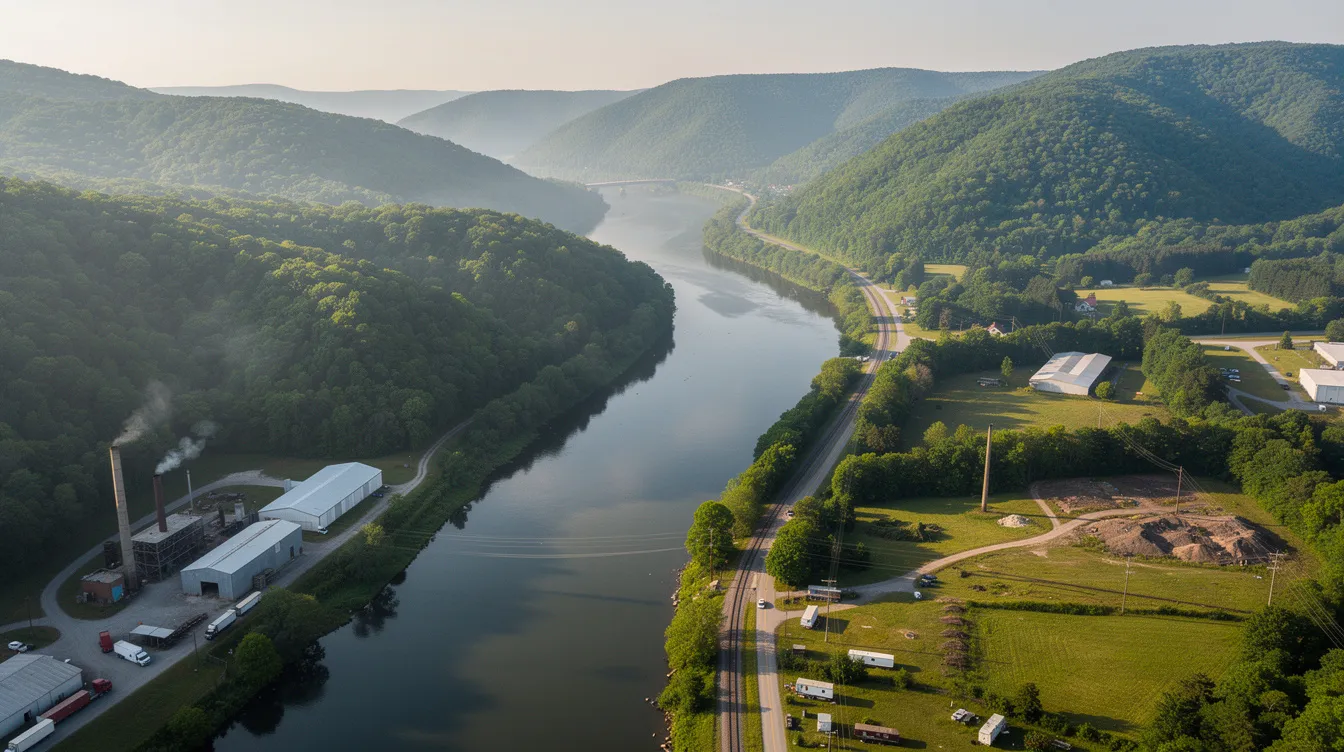
West Virginia law divides the state's 55 counties into 11 Regional Planning and Development Councils. Established under the 1971 Regional Planning and Development Act and codified in West Virginia Code Chapter 8, Article 25, these councils exist to coordinate regional planning and development across county lines. From Region 1 in the southern coalfields - where watershed projects address decades-old water infrastructure gaps - to Region 9 in the Eastern Panhandle, where a new multimodal transit center is taking shape with over $10 million in federal support, these councils touch every corner of the state.
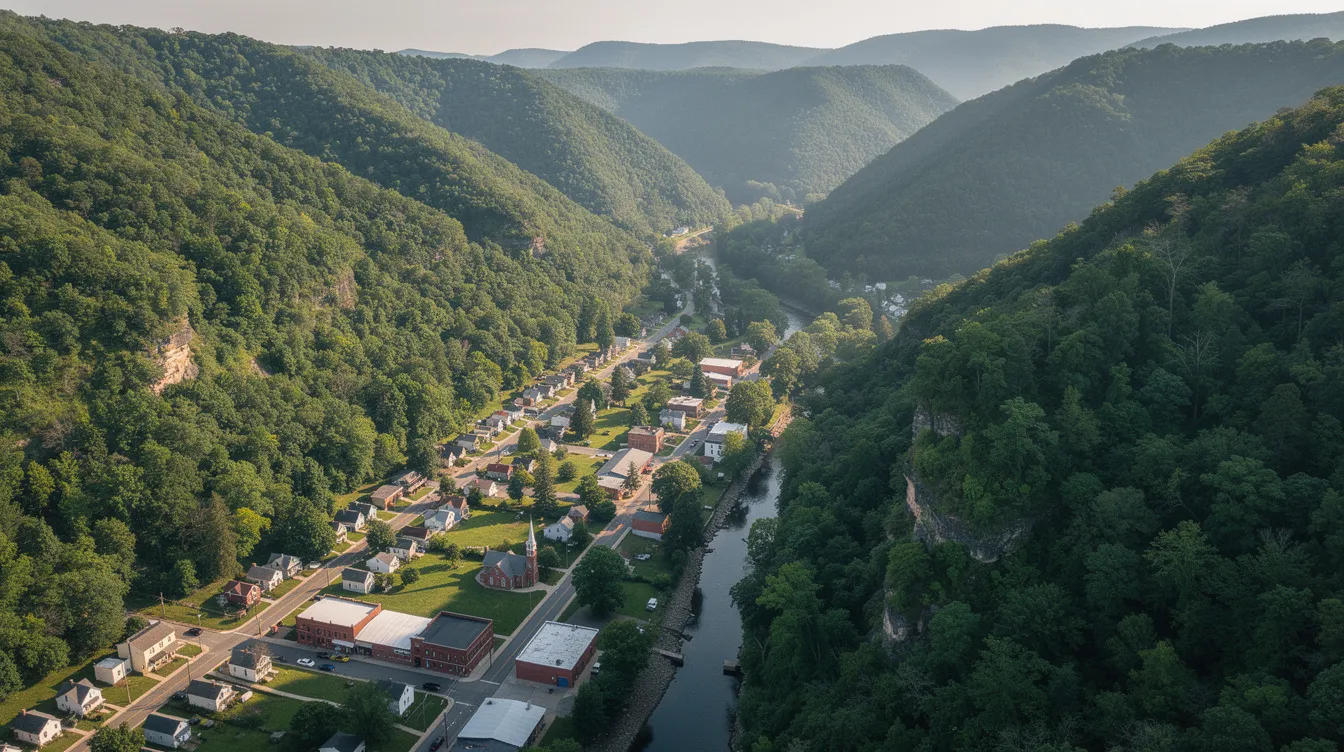
Regional planning matters in West Virginia for practical reasons. Many communities are small, rural, and spread across mountainous terrain. Most do not maintain staff to write complex federal grant applications, conduct environmental reviews, or manage multi-million-dollar construction projects. West Virginia has 11 Regional Planning Councils precisely because pooling expertise across county boundaries lets communities compete for funding and deliver infrastructure they could not build alone.
This article is a practical statewide guide for business owners, local officials, nonprofits, and residents who need to understand what a development council is, which council serves their county, and how to work with it. The information was last reviewed in November 2026 - specific contacts and programs should always be confirmed using the official council websites.
What Are Regional Planning & Development Councils?
A Regional Planning and Development Council in West Virginia is a multi-county governmental organization formed by local governments under state law to conduct regional planning and development. Each council is governed by a board that typically includes county commissioners, mayors, and in some cases private-sector appointees. Region 1's board, for example, includes up to 49 percent private-sector representation alongside elected officials from six counties.
The main functions of these councils include comprehensive regional planning, infrastructure and transportation planning, economic development support, hazard mitigation planning, and developing long-term strategies such as Comprehensive Economic Development Strategies (CEDS). Councils serve as a bridge connecting local governments with state and federal agencies, coordinating closely with local Economic Development Authorities and workforce development partners. They also provide technical assistance including GIS mapping and grant administration, environmental reviews for local projects, census report updates, income surveys, and intergovernmental reviews.
It is important to distinguish these councils from chambers of commerce or business directory platforms. Councils focus on planning and development council responsibilities - assisting local jurisdictions with grant writing services, soliciting engineers and other consultants, managing bond counsel relationships, ensuring labor compliance, and administering public projects. Their mission is not to market businesses or sell memberships but to plan, fund, and deliver the infrastructure and development projects that communities need.
Why West Virginia Created 11 Development Regions
The 1971 Regional Planning and Development Act directed the Legislature to divide West Virginia into 11 development districts designed to promote stability and economic development through intergovernmental cooperation. The reenacted West Virginia Code under Chapter 8, Article 25 gave these districts their statutory foundation: locally controlled entities composed of county and municipal officials, tasked with creating proactive strategies for regional growth.
The policy context of the late 1960s and early 1970s drove this decision. Federal community development programs - including Appalachian Regional Commission initiatives - were expanding, and West Virginia's fragmented local governments were missing opportunities because individual towns lacked the programmatic knowledge and administrative capacity to compete. Many West Virginia communities face limitations due to lack of resources and administrative capacity: they cannot maintain staff with the expertise needed for complex grant applications or multi-year infrastructure projects. Councils assist smaller municipalities that lack dedicated planning staff, offering them access to professional planners, mapping capabilities, and grant writers they could not afford independently.
Infrastructure projects like water and sewer systems, broadband networks, and highway corridors inevitably cross county lines. These are growth related problems that require multi-jurisdictional coordination - a single public service district's waterline extension may depend on an adjoining county's treatment plant capacity. Regional planning helps communities prioritize limited resources, align local needs with state and federal strategies, and address regional challenges that extend beyond individual municipalities.
The councils were designed as locally controlled but state-recognized entities, supported through agencies like West Virginia's Community Advancement and Development office and the West Virginia Development Office. Their statutory purpose connects directly to modern needs: economic diversification, infrastructure upgrades, hazard resilience, and workforce support across all 55 counties.
Directory of West Virginia's 11 Regional Planning & Development Councils
The following table serves as a quick statewide reference for all 11 West Virginia regional planning and development councils and the counties they cover. Contact information and websites should be verified through the official statewide council directory before use.
| Region | Official Council Name | Counties Served | Official Website | Primary Service Focus (Examples) |
|---|---|---|---|---|
| 1 | Region I Planning & Development Council | McDowell, Mercer, Monroe, Raleigh, Summers, Wyoming | regiononepdc.org | Water/sewer infrastructure, GIS mapping, hazard mitigation |
| 2 | Region II Planning & Development Council | Cabell, Lincoln, Logan, Mason, Mingo, Wayne | region2pdc.org | Infrastructure planning, industrial site development, economic planning |
| 3 | Regional Intergovernmental Council (RIC) | Boone, Clay, Kanawha, Putnam | wvregion3.org | Transportation (MPO), corridor studies, community development |
| 4 | Region IV Planning & Development Council | Fayette, Greenbrier, Nicholas, Pocahontas, Webster | reg4wv.org | Water system improvements, broadband, flood mitigation |
| 5 | Mid-Ohio Valley Regional Council (MOVRC) | Calhoun, Jackson, Pleasants, Ritchie, Roane, Tyler, Wirt, Wood | movrc.org | Community infrastructure, transportation, revolving loan funds |
| 6 | Region VI Planning & Development Council | Doddridge, Harrison, Marion, Monongalia, Preston, Taylor | regionvi.com | Wastewater upgrades, corridor development, economic planning |
| 7 | Region VII Planning & Development Council | Barbour, Braxton, Gilmer, Lewis, Randolph, Tucker, Upshur | regionvii.com | Rural water/sewer, grant assistance, feasibility studies |
| 8 | Region VIII Planning & Development Council | Grant, Hampshire, Hardy, Mineral, Pendleton | regioneight.org | Hazard mitigation, environmental compliance, rural infrastructure |
| 9 | Eastern Panhandle Regional Planning & Development Council | Berkeley, Jefferson, Morgan | region9wv.com | Growth management, transit planning, land use coordination |
| 10 | Bel-O-Mar Regional Council | Marshall, Ohio, Wetzel | belomar.org | Industrial waterline extensions, brownfield redevelopment, CEDS |
| 11 | Brooke-Hancock-Jefferson Metropolitan Planning Commission | Brooke, Hancock | bhjmpc.org | Industrial site redevelopment, transportation planning, port infrastructure |
Regional Profiles: Development Councils Serving West Virginia's 55 Counties
The following subsections summarize each development council's territory and typical planning and development activities, with concrete project examples where officially documented. Descriptions draw on verified sources and avoid promotional language in favor of factual, cited information.
Region 1 – Southern West Virginia Planning and Development Council
Region 1 serves McDowell, Mercer, Monroe, Raleigh, Summers, and Wyoming counties. The council's office is located at 241 Mercer Springs Road, Suite 21, Princeton, WV 24740, with a main phone line at (304) 431-7225. The region's coalfield heritage, scattered rural communities, and aging infrastructure create significant demand for water, sewer, and community development support.
The Elkhorn Creek Watershed in McDowell County represents a federally supported planning effort to reduce flooding and improve water infrastructure for communities in the southern coalfields. Region 1's council typically handles public water and sewer extensions, hazard mitigation planning, housing-related infrastructure improvements, and grant administration through programs like CDBG and USDA Rural Development. Local officials and nonprofits in Region 1 typically engage the council by bringing project concepts for feasibility review, using council staff for grant writing, and coordinating multi-county initiatives.
Region 2 – Western West Virginia Planning and Development Council
Region 2 covers Cabell, Lincoln, Logan, Mason, Mingo, and Wayne counties, with its office at 400 Third Avenue, Huntington, WV 25701, phone (304) 529-3357. The region's strategic position along the Ohio River, combined with southwestern West Virginia's coalfield communities, gives the council a dual focus on industrial corridor development and rural infrastructure.
The Apple Grove Sanitary Sewer Project in Mason County stands as a significant example of how regional planning enables major economic development. The project supports industrial site readiness in an Opportunity Zone location, and the Apple Grove project will create at least 800 jobs tied to private industrial investment. The council's role centers on planning, grant coordination, and infrastructure development rather than direct private investment. Other common activities include downtown revitalization planning, broadband feasibility work in rural counties, and water and sewer upgrades for small municipalities across the six-county region.
Region 3 – Regional Intergovernmental Council (Kanawha Valley)
Region 3's four counties - Boone, Clay, Kanawha, and Putnam counties - are served by the Regional Intergovernmental Council (RIC), headquartered at 315 D Street, South Charleston, WV 25303, phone (304) 744-4258. RIC is a voluntary council of local elected officials that plays a dual role: as a planning and development council for the four-county region and as a Metropolitan Planning Organization (MPO) for the Kanawha Valley.
RIC's transportation planning work includes developing long-range plans, Transit Improvement Programs (TIP), and safety/corridor studies. Recent initiatives include the I-64/WV-34 interchange study in Teays Valley, Hurricane Main Street improvements, and updates to bicycle and pedestrian plans. Local governments and authorities in the Kanawha Valley use RIC for CEDS participation, project-level support for infrastructure and community development, and coordinating closely with state and federal transportation agencies.
Region 4 – Central and Southeastern West Virginia Planning and Development Council
Region 4 covers Fayette, Greenbrier, Nicholas, Pocahontas, and Webster counties, with its office at 885 Broad Street, Suite 100, Summersville, WV 26651, phone (304) 872-4970. The region blends outdoor recreation economies around New River Gorge and Monongahela National Forest with small-town infrastructure needs.
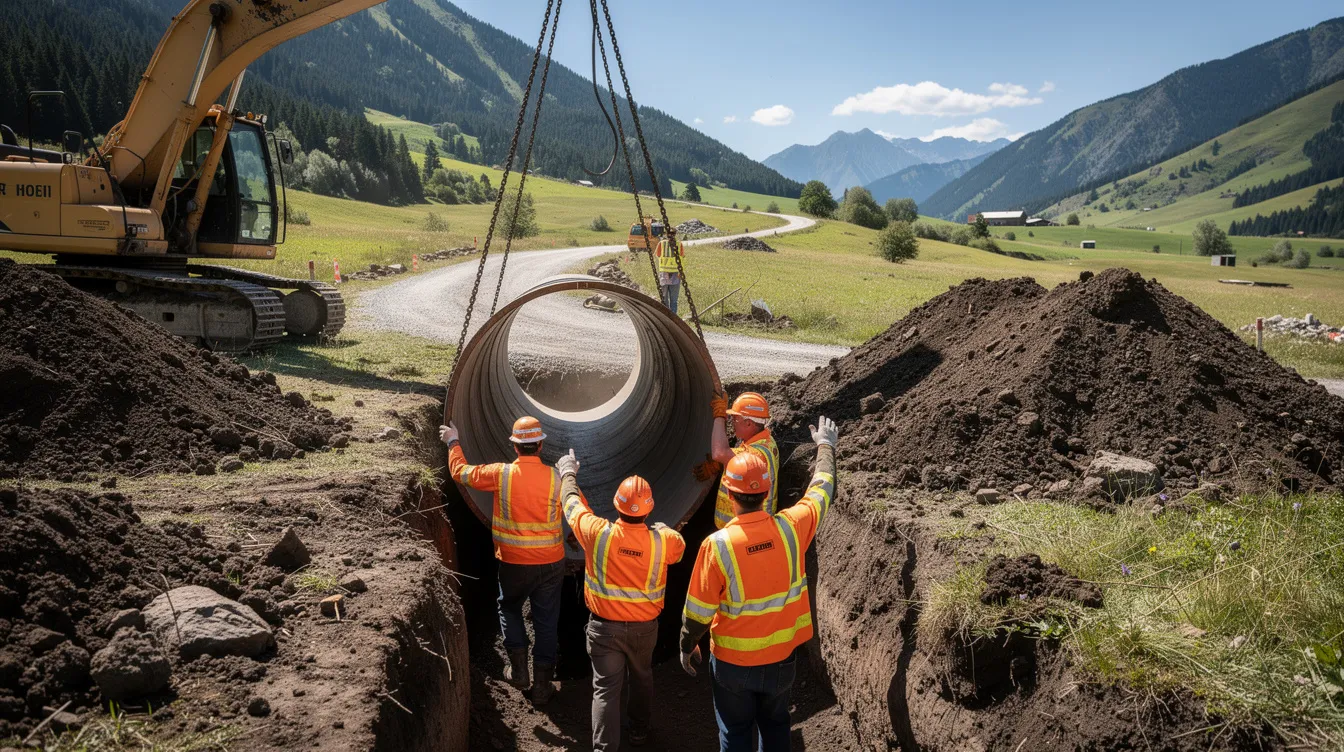
The Lewisburg Water System Improvement Project demonstrates how councils manage complex multi-source funding packages. The Lewisburg project serves approximately 6,163 customers and involves upgrading distribution pipelines, treatment systems, and rights-of-way with oversight from both contract engineers and Region 4 staff. Funded in part through USDA, the project supports major employers and enables planned residential development in the city's growth area. Region 4 is also involved in hazard mitigation planning, broadband projects like the Greenbrier PSD2 broadband initiative, and flood mitigation efforts in communities like Minden.
Region 5 – Mid-Ohio Valley Regional Council
Region 5 is formally organized as the Mid-Ohio Valley Regional Council (MOVRC), headquartered on Market Street in Parkersburg, WV 26101, phone (304) 422-4993. It serves eight counties: Calhoun, Jackson, Pleasants, Ritchie, Roane, Tyler, Wirt, and Wood. The region stretches from the Ohio River corridor through rural interior counties where small towns and public service districts depend heavily on council support for public infrastructure planning, community facilities, and transportation coordination. MOVRC also administers revolving loan funds to assist new and expanding businesses in certain eligible areas.
Region 6 – North Central West Virginia Planning and Development Council
Region 6 serves Doddridge, Harrison, Marion, Monongalia, Preston, and Taylor counties, with its office at 34 Mountain Park Drive, White Hall, WV 26554, phone (304) 366-5693. Anchored by the I-79 High Tech Corridor and university-based growth in Morgantown, Region 6 balances urban planning pressures with rural infrastructure needs.
The council's project portfolio includes water and sewer infrastructure work such as Anmoore Wastewater and Water System Improvements and Barrackville Sewer System Improvements - projects that support both residential communities and commercial and industrial development. The region's CEDS helps local officials and businesses understand priorities for growth along the I-79 and I-68 corridors.
Region 7 – North Central Highlands Planning and Development Council
Region 7 covers Barbour, Braxton, Gilmer, Lewis, Randolph, Tucker, and Upshur counties, with an office at 99 Edmiston Way, Suite 225, Buckhannon, WV 26201, phone (304) 472-6564. This is one of the largest geographic regions, with numerous small municipalities and public service districts that depend on the council for identifying priority water and sewer needs, pursuing state and federal grants, and managing construction-phase compliance. Early engagement with Region 7 improves project design, cost estimates, and competitiveness for attracting funds through federal and state programs.
Region 8 – Potomac Highlands Regional Planning and Development Council
Region 8 serves Grant, Hampshire, Hardy, Mineral, and Pendleton counties from its office at 131 Providence Lane, Petersburg, WV 26847, phone (304) 257-2448. The Potomac Highlands region includes agriculture, forestry, outdoor recreation, and small towns where cross-jurisdictional planning balances development with conservation. Typical functions include hazard mitigation planning, rural water and sewer upgrades, community facility improvements, and coordination with state agencies on transportation and broadband initiatives. For local businesses, reliable infrastructure and environmental compliance mean improved access for visitors and residents.
Region 9 – Eastern Panhandle Regional Planning and Development Council
Region 9 - the Eastern Panhandle Regional Planning and Development Council - serves Berkeley, Jefferson, and Morgan counties, with its office at 226 Pilot Way, Suite E, Martinsburg, WV 25405, phone (304) 263-1743. Created on June 20, 1972, under the development act and West Virginia Code Chapter 8, Article 25, the council is composed of county and municipal representatives.
The Eastern Panhandle Transit Authority (EPTA) Transit Operations Center project illustrates the scale of council-supported work. The Eastern Panhandle Transit Authority received $10,580,000 for a new center that will redevelop a 3.9-acre site in Martinsburg, including a transfer center, maintenance facility, and administrative space. Region 9 also addresses rapid-growth planning pressures in the I-81 corridor, hazard mitigation plans, and infrastructure planning that supports both commuters and local employers.
Regions 10 and 11 – Northern Panhandle Planning and Development Councils
The Northern Panhandle is served by two distinct councils. Region 10 - Bel-O-Mar Regional Council - covers Marshall, Ohio, and Wetzel counties from its office at 10 Bridge Street Plaza, Wheeling, WV 26003, phone (304) 242-1800. The Grandview-Doolin Public Service District industrial waterline extension in Wetzel County, estimated at approximately $3.2 million with EDA and private funding, is designed to serve industrial customers and is projected to support 15 to 30 jobs.
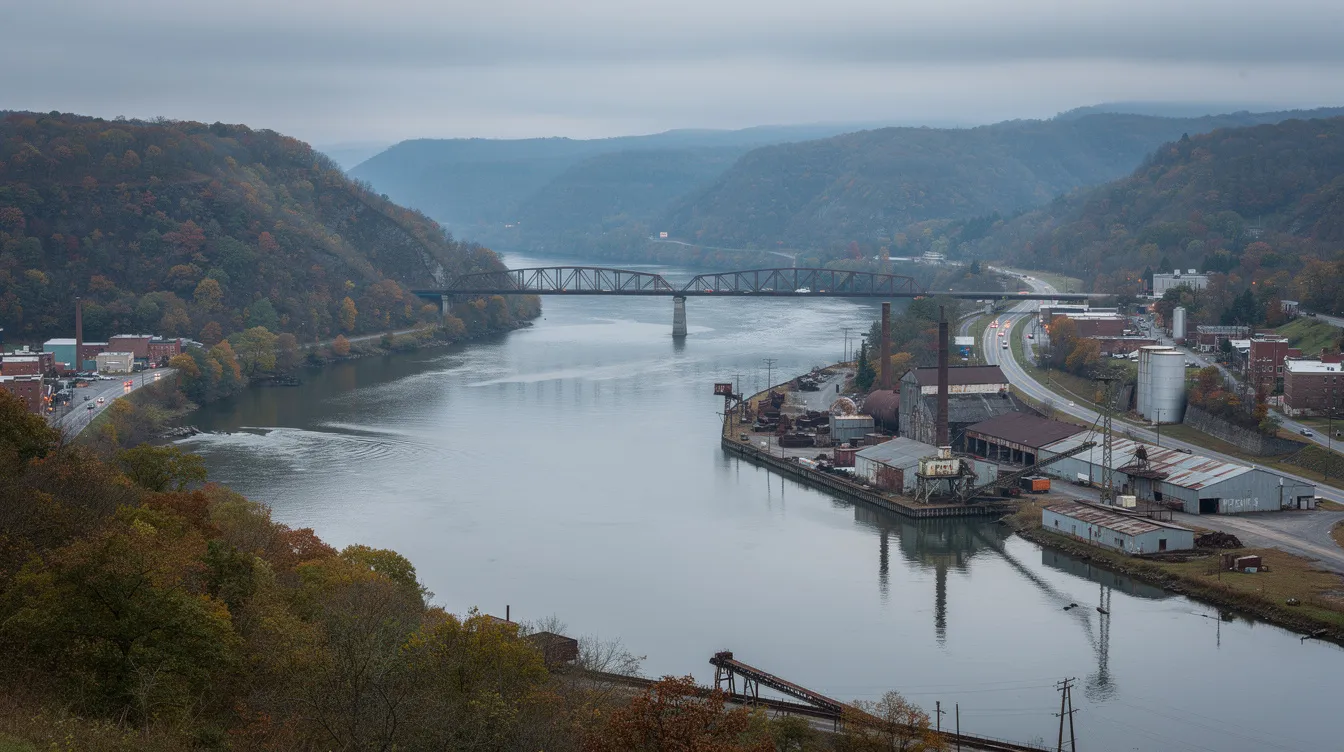
Region 11 - the Brooke-Hancock-Jefferson Metropolitan Planning Commission - serves Brooke and Hancock counties from its office in Weirton (P.O. Box 82, Weirton, WV 26062), phone (304) 797-9666. The Weirton Frontier Crossing project spans 1,300 acres of former steel mill property with trimodal access - river, rail, and highway - and represents one of the state's most significant industrial redevelopment initiatives, supported by layered federal, state, and private funding for industrial road, rail, and port improvements.
How Regional Councils Help Communities Secure Funding
West Virginia's planning and development councils do not typically fund projects directly. Instead, they help local governments and authorities compete successfully for federal, state, and sometimes private grants and loans. Councils assist local jurisdictions with grant writing services, prepare loan and grant applications, and leverage state and federal loans for community projects - effectively helping communities effectively utilize funding resources that would otherwise go unclaimed.
The typical project lifecycle begins with a local government identifying a need, such as a failing water system or an industrial site needing sewer service. The council then assists with feasibility analysis, preliminary engineering, and aligning the project with regional priorities documented in the CEDS. Grant and loan application packages are prepared for agencies like USDA Rural Development, EDA, HUD's CDBG program, and state programs administered by West Virginia Community Advancement and Development, following specific program guidelines for each source.
Once funding is awarded, councils administer projects to ensure proper funding management. This includes procurement of engineers and contractors, financial administration and account maintenance, title VI adherence, labor compliance with federal standards like Davis-Bacon, and ongoing communication with funding agencies. Councils promote regional cooperation to enhance project effectiveness across jurisdictions, but services vary by council - not every project receives funding, and councils cannot guarantee grant awards. Their expertise, however, significantly improves project readiness and competitiveness.
Infrastructure Development: Water, Sewer, Transportation & Broadband
Water and sewer facilities, transportation networks, and broadband connectivity are central to West Virginia's long-term economic development and community health care systems. Councils support infrastructure development such as water and wastewater systems, broadband, and transportation - and they are often the behind-the-scenes project managers making it happen.
Drinking water and wastewater projects dominate council portfolios statewide. The Lewisburg water system upgrade, the Grandview-Doolin industrial waterline, and the Anmoore and Barrackville sewer improvements in Region 6 all demonstrate how councils help plan and deliver complex utility projects that require cooperation among local governments, public service districts, state agencies, and federal funders. These projects must be properly managed through every phase - from environmental reviews to construction oversight.
Transportation planning is another core function. Councils serving urbanizing areas operate as MPOs - like RIC in Region 3 - developing long-range transportation plans and project lists required for federal highway and transit funding. Broadband has emerged as an additional focus, with councils assisting with mapping, feasibility studies, and grant applications for underserved rural areas. Infrastructure projects coordinated by planning and development councils can take multiple years from concept to completion, and continuity of staff and regional planning is essential to sustaining progress.
The Appalachian Regional Commission Connection
The Appalachian Regional Commission is a federal-state partnership covering all 55 West Virginia counties. In FY 2025, ARC and the West Virginia Development Office invested approximately $29.9 million in about 60 projects across the state, focusing on community infrastructure ($21.4 million), community leadership and capacity ($3.7 million), workforce systems ($2.4 million), and diversified economic priorities ($2.5 million). These investments were expected to create or retain 262 jobs and benefit approximately 1.8 million residents.
West Virginia's regional planning and development councils serve as ARC's Local Development Districts - the on-the-ground organizations that help communities develop regionally driven, ARC-eligible projects. Councils play a role in prioritizing goals, aligning local priorities with ARC strategic objectives, including eligible projects in CEDS documents, and assisting local sponsors with applications and compliance. ARC is one significant funding partner among many, and not every council project involves ARC funds - awards depend on eligibility, program rules, and annual appropriations.
Comprehensive Economic Development Strategies (CEDS)
Councils draft and maintain Comprehensive Economic Development Strategies for each region - federally recognized planning documents required by the U.S. Economic Development Administration. A CEDS includes data-driven analysis of regional economic conditions, identification of strengths and weaknesses, a priority projects list, implementation strategies, and metrics for evaluating progress.
The public participation process engages county and municipal officials, development authorities, workforce development and education partners, nonprofits, businesses, and residents through meetings, surveys, and public comment periods. Local officials use CEDS to justify funding requests and align local plans with regional priorities. Businesses and site selectors use them to understand infrastructure plans and workforce trends. Community organizations align grant proposals with documented regional strategies. Readers should download their region's latest CEDS from the council website and participate in updates - these plans guide long-term investments, ensure funding competitiveness, and shape grant decisions.
Opportunities for Small Businesses
Planning and development councils primarily serve local governments and public entities, but their work creates indirect opportunities for small businesses and sometimes direct support mechanisms. New or improved industrial parks with modern water, sewer, and broadband - better transportation and transit access - downtown revitalization and recreation projects that increase customer traffic - all of these stem from council-coordinated investments. The councils help local governments secure funding and drive regional growth, which in turn creates conditions for private-sector success.
Some councils administer revolving loan funds that assist new and expanding businesses with gap financing or low-interest loans. Councils also provide workforce development and training programs through partnerships with affiliates and local organizations. Business owners should review the regional CEDS for priority sectors and locations, contact the appropriate council to ask about available programs, and coordinate with local economic development authorities and Small Business Development Centers that often collaborate with councils. However, councils themselves are not general-purpose grant agencies for private businesses, and individual assistance depends on specific funding programs and eligibility rules.
How to Find Your Regional Council
Every West Virginia resident, official, or business belongs to exactly one of the 11 development regions based on county boundaries. Here is how to locate the correct council:
- Confirm your county. Municipalities are served by whichever council covers their county.
- Use the directory table above or visit WVRegionalCouncils.com to match your county to a development region.
- Visit the official council website to verify current contact information and programs.
- Review current plans - CEDS, hazard mitigation plans, infrastructure priorities - to understand regional strategies.
- Contact the council by phone or email with a brief description of your project or question.
Assemble basic background information - maps, rough cost ideas, problem descriptions - before contacting staff to make the first conversation productive. Individual councils may have different service menus and staffing levels, so the type and depth of assistance varies by region.
Official Development Regions vs. Regional Business Discovery
West Virginia's 11 Regional Planning and Development Councils are official, government-created organizations focused on planning and development. Mountaineer Business Network is an entirely separate, independent private initiative focused on regional business and community discovery. It serves as the statewide gateway for Regional Business Network, providing information, storytelling, and connections to independently operated regional platforms.
Current regional hubs include:
- TygartValley.com - North Central West Virginia communities and businesses
- MyOhioValley.com - Ohio Valley and Northern Panhandle
- MyKanawhaValley.com - Central West Virginia and the Kanawha Valley
- NewRiverValleyWV.com - Southern West Virginia and New River Gorge communities
These boundaries do not necessarily match the 11 government regions and are designed around media, storytelling, and community connectivity rather than statutory development districts. Mountaineer Business Network and its regional platforms are not government councils, not funding administrators, and not affiliated public agencies - they aim to complement the work of planning and development councils by helping residents and businesses connect with opportunities in their communities.
Regional Cooperation and West Virginia's Economic Future
Regional cooperation has become even more critical as West Virginia navigates energy transitions, population shifts, and infrastructure modernization. Planning and development councils help align infrastructure investments, workforce development and education efforts, and economic diversification strategies across sectors like advanced manufacturing, outdoor recreation, and value-added agriculture. Governmental engagement strategies that cross county and regional boundaries - highway corridors, broadband networks, multi-county tourism initiatives - depend on the coordination these councils provide.
Strong planning and development council systems promote stability in local budgets by attracting funds from outside sources, help communities prepare for and recover from hazards through mitigation planning, and make West Virginia more competitive for national infrastructure and economic development initiatives. The effectiveness of West Virginia's 11 development regions ultimately depends on sustained engagement from local officials, businesses, nonprofits, and residents willing to foster community participation in regional planning.
Frequently Asked Questions
The following questions address common issues not fully covered elsewhere in this article.
How do nonprofits and community groups work with a Regional Planning and Development Council?
Nonprofits and community groups typically partner with a sponsoring local government - a city, town, county, or public service district - and then approach the council together, since many infrastructure and community development grants require a public sponsor. Councils can help refine project ideas, identify appropriate funding programs, and sometimes include nonprofit-led projects in broader regional plans. Bring basic information about your mission, project goals, preliminary budget, and potential sites to early conversations with council staff.
What if my project involves counties in two different development regions?
Multi-county projects crossing regional lines are possible. Councils will typically coordinate with one another to determine lead and supporting roles based on where most benefits or costs fall. Contact the council that serves your home county first, explain the cross-boundary nature of the project, and ask how the neighboring region's council will be involved. State agencies and federal funders are accustomed to multi-region collaborations.
Do councils charge fees for their planning and grant services?
Funding models vary by council. Many core planning activities are supported by state and federal planning funds, while some project-specific services may be covered by grant administration line items or modest local contributions. Ask your council directly about any costs or match requirements associated with particular services or projects.
Can councils help with housing, health care, or recreation projects, not just water and sewer?
Yes. Many councils support a broad range of community development projects including housing infrastructure, health clinics, community centers, parks, and recreation facilities, especially when these fit eligible funding programs like CDBG, USDA, or ARC. Councils focus on the planning, funding, and construction administration aspects while local partners typically operate the facilities once built.
How often are regional plans like CEDS or hazard mitigation plans updated?
CEDS documents are usually updated every five years to maintain eligibility for certain EDA programs, while multi-jurisdictional hazard mitigation plans are also typically revised on a five-year cycle under FEMA guidelines. Check your council's website for the most recent plan versions and upcoming public input opportunities to ensure local priorities are reflected in regional strategies.
Conclusion
West Virginia's 11 Regional Planning and Development Councils form the backbone of regional planning, grant coordination, and infrastructure development for all 55 counties. They help communities promote stability, develop long-term strategies, and access complex funding opportunities that most individual towns or counties would struggle to secure alone - from water and sewer extensions serving thousands of residents to transit centers and industrial site redevelopment creating hundreds of jobs.
Local officials, community leaders, nonprofits, and businesses should identify their development region, review regional plans, and build relationships with council staff as early partners in any major project. These councils exist to serve local jurisdictions with innovative solutions to shared challenges, and the earlier a project sponsor engages, the stronger the result.
Mountaineer Business Network and its regional hubs provide complementary business discovery and community-connection tools, but official planning and development council websites remain the primary source for council programs, plans, and contact information. As West Virginia continues investing in water and sewer systems, broadband, transportation, and community facilities, the effectiveness of its regional councils will remain central to the state's economic development and quality of life.