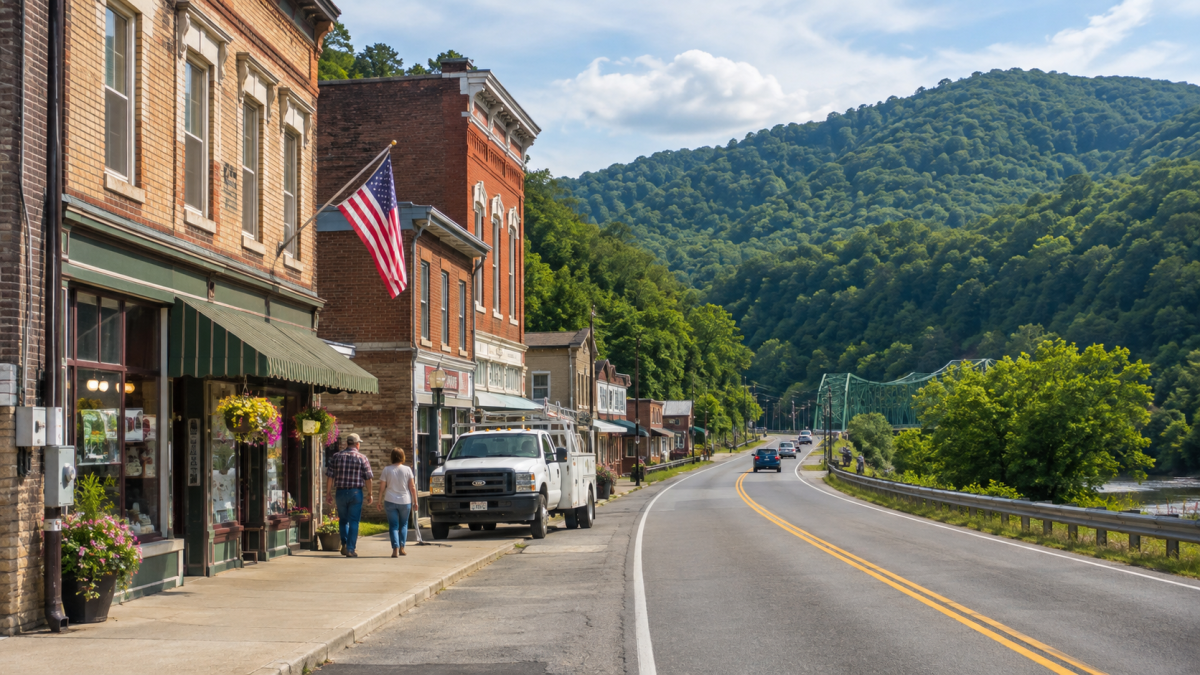
Why a Small Town's Economy Cannot End at the County Line
A rural West Virginia business can do everything right locally and still struggle to grow. It can provide reliable service, earn recommendations, build relationships, and serve its community for years—yet remain almost invisible to potential customers who live just one or two counties away.
That is more than an advertising problem. It is a market-access problem. In a state where many communities have small populations and customers routinely travel for work, shopping, medical care, recreation, and services, a business's realistic market is often larger than its hometown or county. Economic development strategies should recognize that everyday movement.
Supporting local business is essential. Connecting local businesses to the wider regions they already serve is just as important.
The Limits of a Small Local Customer Base
Rural businesses face challenges that cannot always be solved by working harder or posting more often. A limited local population places a practical ceiling on how many customers may need a service in any given week. Household budgets are finite. Seasonal changes, major employer decisions, and shifts in consumer spending can affect an entire community.
Consider a furniture maker, auto repair shop, independent contractor, specialty retailer, or local restaurant. The business may depend on repeat customers close to home, but its future opportunities may also involve people from neighboring counties, visitors passing through, or customers willing to travel for expertise, selection, or value.
Reaching those additional customers does not require abandoning the home community. It means treating that community as the center of a broader service area rather than the outer boundary of the business.
West Virginians Already Live Regionally
County lines are important for government, schools, records, and public administration. They are not necessarily the lines people follow when choosing where to work, shop, or seek services.
Someone living in Weston may shop or seek medical services in the Clarksburg–Bridgeport area. A resident of a smaller town may travel to another county for a specialized repair, an event, or a larger retail selection. Visitors can move between several communities in a single trip. Many service businesses routinely cover multiple counties.
These are illustrations of ordinary regional activity, not claims that every consumer follows the same route. The principle is straightforward: economic activity crosses boundaries even when online information remains divided by them.
West Virginia already recognizes the importance of regional cooperation. Its Regional Planning and Development Councils serve 11 development districts and help communities with planning, infrastructure, funding, and other capacity needs. Those official planning districts perform a different role from a consumer-facing business discovery network. Both, however, reflect the fact that neighboring communities share economic challenges and opportunities.
Why Businesses Can Be Hard to Find Beyond Their Own Towns
A company's information might be spread across a social media page, an outdated online listing, a local chamber directory, a map result, a county website, and word-of-mouth referrals. Each of these channels has value. But none automatically creates a clear, reliable path for someone searching across a wider region.
That fragmentation creates several problems:
- Geographic limits: A customer searching in a nearby community may not encounter a business located across the county line, even when that business serves the customer’s area.
- Scattered details: Hours, service areas, photos, specialties, current offers, and contact methods may be inconsistent or difficult to verify.
- Social-only visibility: Facebook can be an effective local communication tool, but a post that circulates today may be difficult for a new customer to find weeks later.
- Limited staff time: Many small businesses cannot continually maintain multiple websites and promotional channels.
- Disconnected community information: Events, services, visitor resources, and businesses often appear in separate places even when they are part of the same local economy.
The solution is not to dismiss existing channels or insist that every business build a sophisticated website. The more practical opportunity is to make accurate business information easier to discover and maintain within a meaningful regional structure.
Regional Discovery Is Different From Another Statewide Directory
A statewide list may contain thousands of businesses, but size alone does not make it helpful. Someone searching for a local contractor, restaurant, repair service, or event usually needs results that reflect realistic travel distances, nearby communities, and the kind of service they need.
That is why Mountaineer Business Network is designed as a public-facing statewide gateway, not a replacement for regional business discovery. Its role is to provide statewide context and guide visitors into regional networks. The regional hubs are where detailed community navigation, business discovery, events, offers, and other local participation take place.
This distinction matters. A state gateway can help people understand how regional markets connect without trying to operate as one enormous county-by-county business directory. The regional experience can remain relevant to the people and businesses it actually serves.
A Working Example: North-Central West Virginia's Tygart Valley
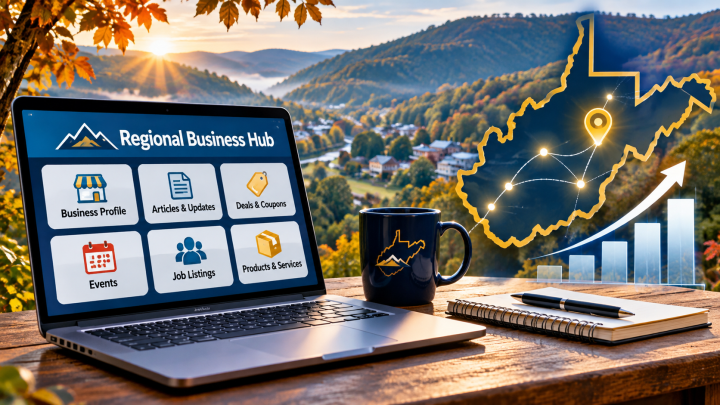
TygartValley.com provides a working example of this regional approach. Rather than treating each community as an isolated destination, the platform connects North-Central West Virginia communities with business categories, services, activities, events, and regional discovery pathways.
Visitors can begin with a community such as Weston, explore nearby towns, or search for a type of business or service. The structure reflects how customers actually move through the area rather than assuming they will search only within one municipality.
For a participating business, the potential value goes beyond appearing in a list. Richer business information, service descriptions, current offerings, and member-managed content can give customers more reasons to make contact. The effectiveness of those features should ultimately be judged by practical measures such as qualified inquiries, profile activity, referrals, and business participation—not simply by the number of pages published.
Tygart Valley is presented here as an operational example of regional discovery infrastructure, not as proof of a measured increase in sales or employment.
Regional Market Access Also Supports Business Retention
Economic development discussions often focus on attracting new employers, major investments, and new business registrations. Those efforts matter. But existing businesses are equally important to the day-to-day health of a rural economy.
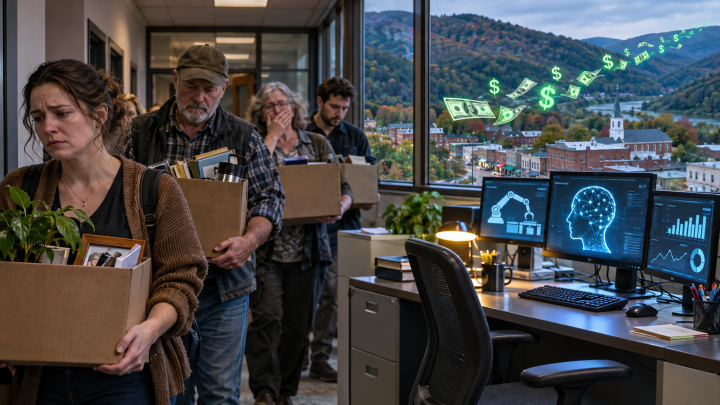
When an established local business closes, a community can lose jobs, a tax-paying enterprise, useful services, and the relationships that business supported. Helping existing firms remain visible, find customers, and adapt to changing demand deserves continuing attention.
Regional market access is not a substitute for financing, workforce training, broadband, transportation, or sound business management. It is one complementary tool. A business with a realistic service area spanning several counties should have a practical way to communicate that reach to potential customers.
The West Virginia 2026–2030 Appalachian Development Plan, published through the Appalachian Regional Commission, provides a statewide context for discussions of economic development priorities. Turning broad regional goals into practical connections between existing businesses and customers is one area where well-organized digital discovery can contribute.
What Chambers, Development Organizations, and Community Partners Can Do
No single website can solve every rural economic challenge. And a regional discovery framework should complement—not duplicate or replace—the work of chambers of commerce, local governments, planning councils, and economic development organizations.
There are, however, practical questions these organizations can ask:
- Can customers in nearby counties readily find businesses that serve them?
- Are local businesses represented with accurate service areas, contact details, specialties, and current information?
- Can participating businesses or authorized representatives update information without relying on a small government or nonprofit staff for every change?
- Are community events, business services, workforce information, and visitor opportunities connected to the places people already search?
- Can the organization measure useful activity, such as business participation and inquiries, rather than counting only website visits?
Those questions help shift the conversation from building another promotional website to improving the usefulness of the region's existing digital information.
Preparing Rural Businesses for AI-Assisted Discovery
How people look for local information is changing. Search engines, maps, social platforms, and AI-assisted tools may present businesses in different ways. A small business cannot control every answer or recommendation generated by those systems.
What it can do is maintain clear, accurate, accessible information about its location, services, service area, contact options, and current offerings. Regional organization gives that information additional context by showing the communities and markets a business is relevant to.
Structured information does not guarantee an AI citation or a new customer. It does make it easier for people—and systems that retrieve public web information—to understand what a business offers and where it operates. Read more in Mountaineer Business Network's guide to AI digital readiness in West Virginia.
Connecting Statewide Context to Regional Opportunity
For West Virginia, the larger opportunity is not to replace local identity with a statewide brand. It is to preserve the character of individual communities while making their businesses and resources easier to find across the regional markets they share.
Mountaineer Business Network serves as a statewide gateway into that approach. Its regional discovery model is part of the broader Regional Business Network infrastructure, which organizes state-facing channels and regional platforms around actual market relationships.
Business owners and residents can find their regional entry point. Officials and institutional organizations interested in the larger infrastructure model can explore Regional Business Network for additional context.
A rural business should be rooted in its community without being limited to the purchasing power of that community alone. Connecting local businesses to regional markets is a practical step toward stronger, more resilient rural economies.